
Throwback: Pushing Through the Pain
Slow down, shift focus, and don't get discouraged

Author’s Note: This article originally published on May 7, 2025 on Medium.com
Recently, I started running a mile or two per day. After a couple of weeks, I began increasing my distance to three, five, and even ten miles. After two months, I started discussing my running with folks at work. One co-worker, who has completed forty marathons, began challenging me to go further.
I can be competitive. Talking to him about marathons got me focused on trying to hit the half-marathon distance. I mapped out a 13-mile route and aggressively started trying to reach that goal. I wrote about the process in my article on three things that running and writing have in common.
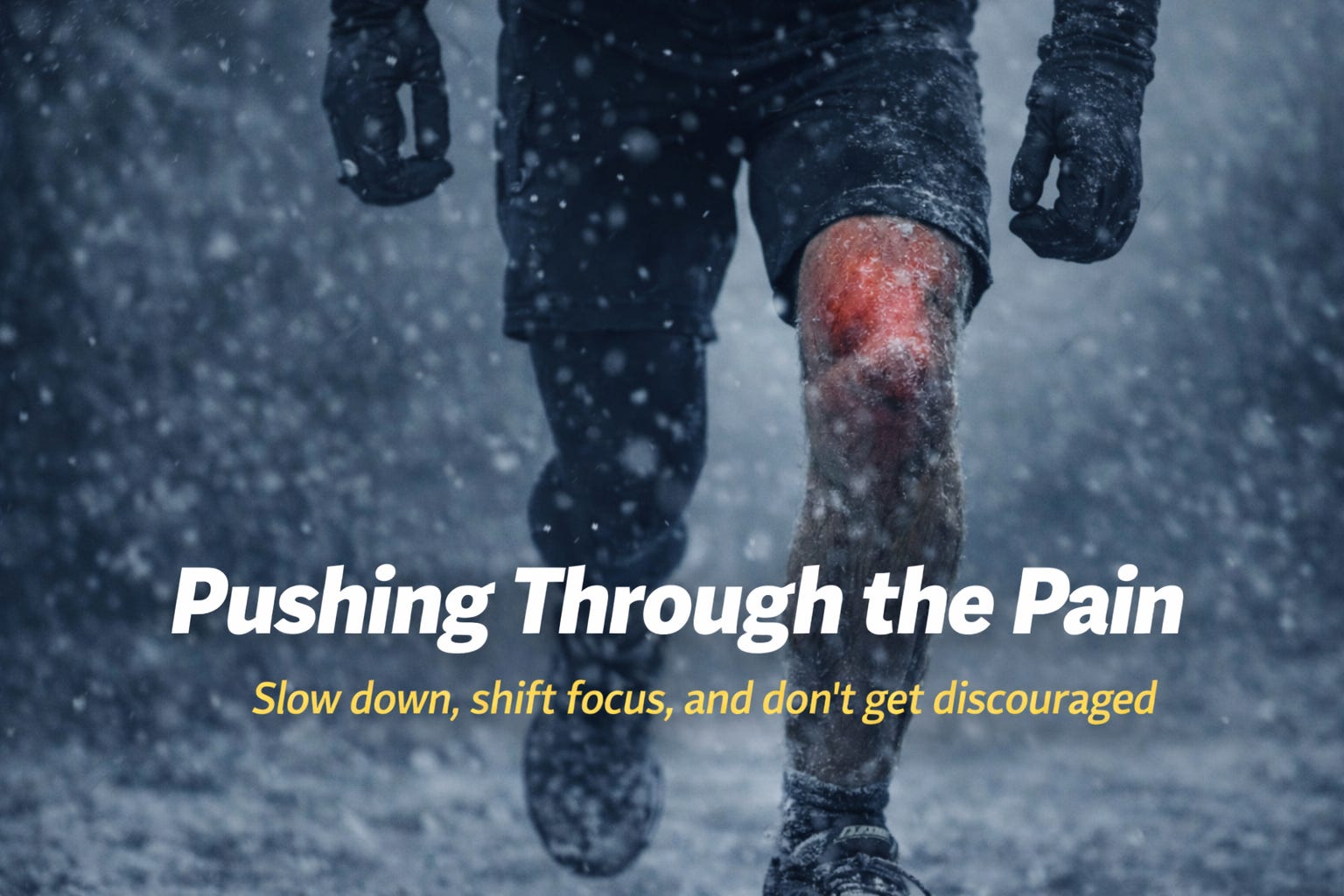
In short, I hit my goal — but not without consequence. I developed knee pain in my left leg that I’m pretty sure is related to overuse. My initial thought was that I should probably stop running. However, my fear is that if I stop for too long, I won’t go back to it.
What I’m learning — in running and in life — is that there are always alternatives to stopping when something you’re doing begins to hurt.
Slow Down
The first possible solution is simply to slow down. I wasn’t only running for distance; I was also trying to improve my speed. One of the first things I tried was walking back my pace a little. After logging over 125 miles in one month, I also started shortening the distance I was running.
The combination of reducing speed and distance helped a lot. To give some perspective: the first week my knee began to hurt, I found myself limping down the stairs from my bedroom to my living room. Working nights, I also noticed my knee would begin to throb toward the end of my shift.
As I slowed down, the pain was also reduced.
It didn’t go away completely — no, it still nagged me. I got to a point where I thought everything was better. I was walking down the steps normally, and my knee stopped hurting at work. I took a leap of faith and set out on a six-mile run. It was going great. I had a good pace, and I wasn’t tired at all. As I approached mile three, a familiar pain emerged in that knee.
It wasn’t terrible, and I was running toward a long downhill section. I decided to push through the pain. Here, I learned another valuable lesson for both running and life:
Pushing through pain can sometimes lead to more gains — and other times it can just lead to more pain. Know the difference.
By the end of that run, my knee was about as bad as it was before I had started slowing down. I found myself right back where I was. I realized that slowing down wasn’t going to fix me overnight, and stopping still wasn’t an option. I needed to shift focus.
Shift Focus
When you’re focused on doing one thing consistently, it can be difficult to shift that focus. Over the winter, I was committed to running on my treadmill to lose weight. In mid-January, my treadmill motor started making all kinds of concerning noises.
Right next to my treadmill is an old elliptical. I hated that thing. I barely ever used it and had considered getting rid of it multiple times. But with the treadmill acting up, I had to shift my focus if I wanted to keep my weight loss goals on track. I shifted to using the elliptical — and actually started to really enjoy it. I did all my workouts on it for about two and a half months.
As winter turned to spring, I knew my basement would start getting unbearably hot, and the elliptical would no longer be ideal. I shifted again. I started running outside. The concept of shifting focus had already been built into my plan.
Fast forward to the present: my knee isn’t getting much better, and I need to shift again. I decided to back my distance way off when I ran outside and returned to the elliptical for a couple of days between outdoor runs. I also added a lifting regimen. Most of the articles I’ve read about runner’s knee suggest that it’s often caused by weaknesses in certain muscles. Here, I found yet another lesson that applies to both life and running:
When we shift our focus, we often begin to strengthen muscles we didn’t realize were essential to successfully doing what we were previously focused on.
Hip flexors, hamstrings, calves, and back muscles all need to be strong and flexible to become an injury-free long-distance runner. They’re also muscles we tend not to focus on in our weight lifting and stretching routines. As much as I hate some of the exercises I’m doing right now, I know they are what I need in order to get back to being a healthy and fast long-distance runner.
Don’t Get Discouraged
When we’ve set a goal in our minds, setbacks can really derail our progress.
It’s important that we don’t get discouraged or lose sight of our ultimate goal.
Oftentimes, our initial gut instinct is to stop. It’s the easiest option — and a surefire way to send yourself into a pit of despair. Instead of stopping, consider slowing down and adjusting your focus for a time until you get back on track.
Ultimately, if you do decide to stop, be sure to set clear reasons and timeframes for the break. If you don’t, you’ll likely fall into a state of discouragement, and before you know it, you’ll have completely given up on your goal.
When we slow down, and shift our focus, we often get closer to achieving our original goals and that’s… Uncredible.
Music for voice over by Jeremusic70 on Pixabay.